
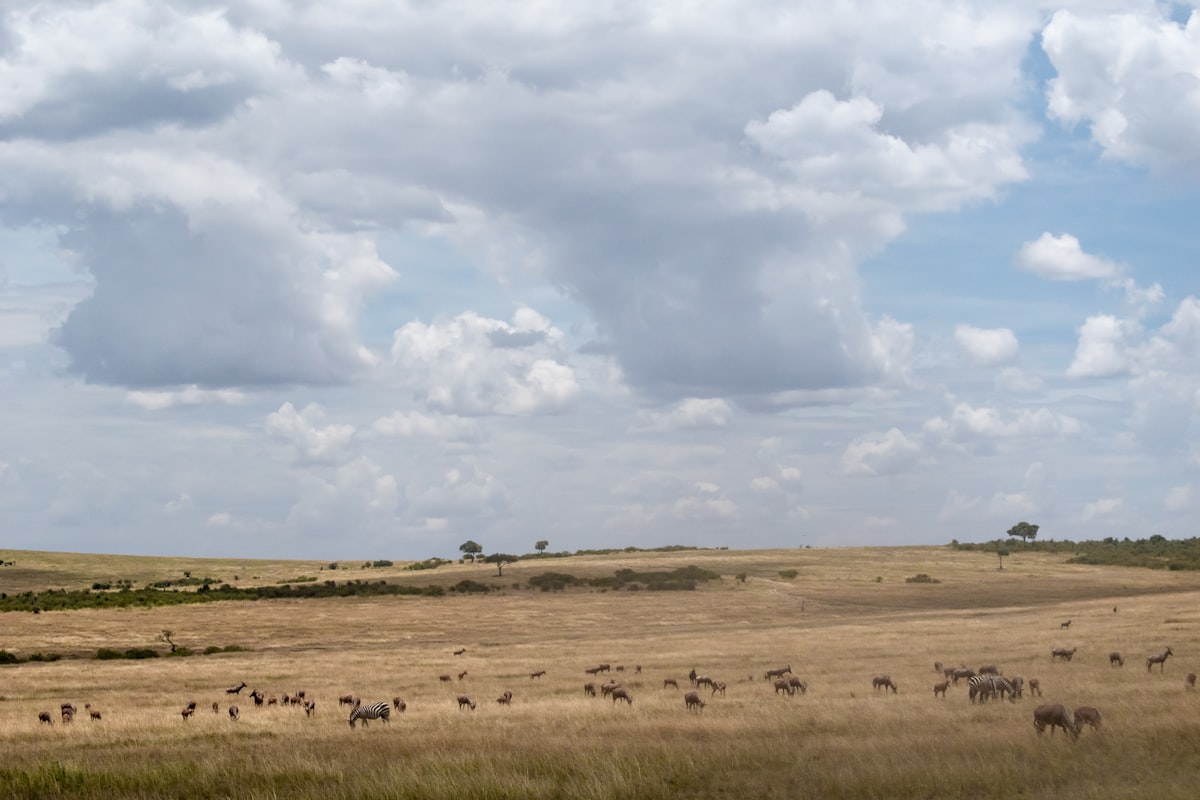
Kenya does not have a single “best time to visit” — it depends entirely on what you want to do. Wildlife viewing, the Great Migration, beach weather, budget travel, and photography all peak at different times. This guide breaks it down month by month so you can choose the right window for your trip.
Kenya's Two Dry Seasons & Two Rainy Seasons
What are Kenya's seasons?
Kenya has four distinct seasons — two dry and two wet:
- Long Dry Season (Jun–Oct): Peak safari season. Grass is short, animals concentrate around water sources, and skies are clear. The Great Migration river crossings happen July–October in the Maasai Mara.
- Short Dry Season (Jan–Mar): Excellent wildlife viewing, lower prices than the June–October peak. Calving season in the Maasai Mara from January.
- Long Rains (Mar–May): Heaviest rainfall, especially April. Some roads become impassable. Many lodges offer discounts. Not ideal for first-timers but experienced travelers find this period has dramatic landscapes and very few tourists.
- Short Rains (Oct–Dec): Short, sharp afternoon showers that rarely disrupt a full day. October is still good for wildlife. November is quieter and cheaper. December picks up again around Christmas.
The Great Wildebeest Migration
When is the Great Migration in Kenya?
The Great Wildebeest Migration — the movement of 1.5 million wildebeest, zebra, and gazelle between Tanzania's Serengeti and Kenya's Maasai Mara — enters Kenya between July and October. The famous river crossings at the Mara River, where herds plunge through crocodile-infested waters, occur primarily in August and September.
No one can guarantee a river crossing on any given day — the herds move on their own schedule. But staying in the Mara for 3–5 nights during August or September gives you the best statistical chance of witnessing one. Staying in a Mara River camp positions you closest to the main crossing points.
Can I see the Migration outside August and September?
The migration is a year-round cycle, not a single event. In January and February, the calving season happens in Tanzania's southern Serengeti — visible if you combine a Kenya and Tanzania itinerary. The herds are in Kenya's Mara from July to October, then return to Tanzania. There is no river crossing in November to June — the herds are south in Tanzania at that time.
Month-by-Month Kenya Travel Guide
January & February
Rating: Excellent. Dry, warm (25–30°C), clear skies. The Maasai Mara is quiet after the peak season and prices are lower. January is calving season — predator activity is high as lions, cheetahs and hyenas pursue newborns. Amboseli is superb at this time — clear skies give perfect views of Kilimanjaro. The coast is warm and dry with steady south-east breezes — perfect for Diani and Watamu.
March
Rating: Good transitioning to mixed. The long rains begin mid-to-late March. Early March is still excellent for wildlife. Avoid booking a game drive for late March if rain-sensitive activities are important. Prices are dropping — good value month.
April & May
Rating: Low season (challenging but rewarding for the right traveler). Peak rainy months. Landscapes are dramatically green. Many lodges discount rates by 30–50%. Wildlife is dispersed as water is everywhere. Some unpaved roads — including tracks in the Maasai Mara and Samburu — may become impassable without a capable 4x4. For photographers, the light is stunning and lodges are empty. Not recommended for first-timers or those prioritizing wildlife density.
June
Rating: Very good. The rains ease and the dry season begins. Grass is still green but thinning. Animals begin moving toward water. The Mara herds are building up for the migration. Prices are rising. Excellent transition month — good value before the full July–August peak.
July & August
Rating: Peak season — the best overall. The Mara River crossings are in full swing. Wildlife viewing throughout Kenya is at its finest — dry conditions concentrate animals at waterholes and rivers. Samburu is spectacular. Amboseli is excellent. Prices are highest and lodges sell out months in advance. Book 4–6 months ahead for July–August. Morning temperatures in the Mara are cool (15–20°C) — pack a fleece layer.
September & October
Rating: Excellent. September is still peak — migration crossings continue and wildlife density remains very high. October sees the herds beginning to move back toward Tanzania. Short rains begin in October — usually afternoon showers that rarely disrupt game drives. October is a great value month: quieter than August, still superb wildlife, and some lodges begin shoulder-season rates.
November
Rating: Good for budget travelers. Short rains are active — typically heavy afternoon showers and cool nights. Prices drop significantly. Game drives happen in the dry morning windows. Landscapes are vivid green. Far fewer tourists. Good option if budget is a priority.
December
Rating: Very good (especially late December). Rains ease and the dry season begins again. The Christmas and New Year period (Dec 20–Jan 2) is almost as busy and expensive as July–August — book well ahead. Early December is a bargain window before the holiday rush.
Best Time for the Kenya Coast
When is the best time to visit the Kenya coast?
The Kenyan coast has its own microclimate. The best beach weather is during the dry northeast monsoon (December to March) — calm seas, warm temperatures, and clear skies. The second dry window from July to September is also good but can be windier (kite-surfing is popular at Diani in this period). Avoid the long rains (April–May) for beach visits — while you can still swim, the overcast skies and heavy showers limit the experience.
Planning Tips by Traveler Type
Best time for first-time safari visitors
July to October. Peak wildlife, clear skies, dramatic migration crossings. Budget accordingly — this is the most expensive window.
Best time for budget travelers
November, March, and early June. Shoulder-season rates with acceptable wildlife viewing. Avoid April if you want predictable game drive conditions.
Best time for photographers
January–February (clear Kilimanjaro views, calving season) or August–September (migration drama, golden grasslands).
Best time for combining safari and beach
January–February or late July–August. Both windows offer good conditions in both ecosystems.
Planning your travel window? Our hire fleet is available year-round. Whether you need a capable 4x4 for the rainy-season Mara or a comfortable saloon for a Nairobi-to-Diani beach road trip, we have vehicles for every season. Talk to us about the best vehicle for your travel dates.